Picture walking through a bookstore or scrolling online and realizing every other cover looks oddly familiar. A model staring into the distance, a handshake frozen mid-grip, a generic city skyline slapped on repeat. These aren’t unique designs; they’re the result of a heavy reliance on the same book stock images over and over. The sameness is hard to miss, and even harder to care about by readers.
That’s the quiet crisis of stock photography in 2025. It’s cheap, it’s everywhere, and it’s making businesses and authors fade into the background. On the other hand, the illustrated cover has become the unexpected guest at a formal dinner, attention-grabbing, memorable, and impossible to ignore.
When was the last time a book stock image made you stop and wonder what story it held? Now compare that to a hand-drawn design, such as the one featured in a bestseller like Circe by Madeline Miller, or the quirky illustrated look that has propelled rom-com titles into Netflix deals. The difference isn’t subtle.
This isn’t just a style preference; it’s a market signal. Illustrated covers aren’t “artsy extras” anymore. They’re outperforming book cover stock images because they bring back something people are craving: originality. And originality is a business advantage.
So if the goal is to stand out, connect with customers, and actually sell the product behind the cover, the question isn’t “Should illustration be considered?” It’s “Why they are outselling stock photo covers in 2025”?
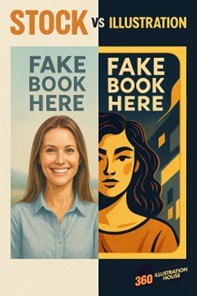
Stock photos used to be a shortcut. A quick fix to make something look polished without breaking the budget. But fast-forward to 2025, and that shortcut has turned into a dead end.
The biggest problem? Oversaturation. Audiences have been scrolling through stock-heavy ads, websites, and book covers for years, and their eyes are now trained to spot a book cover stock image a mile away. That “perfectly smiling” model? She’s already appeared on ten different ads, three business blogs, and maybe even your competitor’s LinkedIn banner.
This cookie-cutter effect creates two big issues:
And let’s not forget fatigue. Imagine binge-watching a series where every episode uses the same background track. The tune may have been catchy once, but by the tenth repeat, it’s noise. Stock photos are pulling the same trick on audiences, and it’s making them tune out before they’ve even read a headline.
The illustrated cover has become the antidote to visual fatigue, and the results show up everywhere from book charts to brand campaigns. Instead of looking like something recycled from a design library, it feels fresh and intentional, the exact qualities that audiences reward with attention.
Readers and buyers are quick to scroll past a familiar book stock image, especially when they’ve already seen it used on half a dozen other covers. Illustrated designs change that reaction. They feel original at first glance, and that tiny spark of surprise is enough to make someone pause, click, or pick up a book.
Bestseller lists prove it; titles like Circe by Madeline Miller and People We Meet on Vacation by Emily Henry didn’t just sell stories, they sold moods through illustrated covers that were instantly recognizable.
An illustrated cover isn’t just decoration; it tells a story before the first line of text. A neon-sketched skyline suggests a fast-paced thriller. A hand-drawn couple on opposite ends of a park bench sets up a romantic comedy. Even non-fiction titles now lean on illustration, using simple linework or playful sketches to make complex topics approachable.
Compare that with a book cover stock image of yet another pensive model; there’s no story there, only repetition.
This shift isn’t limited to publishing. On social media, illustrated packaging often outperforms photo-heavy ads because it jumps out in crowded feeds. Quirky doodles on cartons or Glossier’s minimalist illustrated campaigns prove how strong visuals can become part of a brand’s personality.
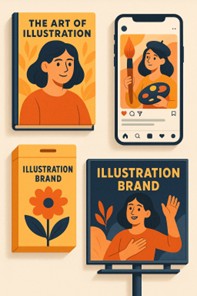
In both cases, the decision to step away from book stock images and generic visuals has paid off with customer loyalty and cultural recognition.
Illustrations also carry hidden signals that influence how audiences feel about a product:
Think of stock images as wallpaper; it’s there, but nobody pays attention to it. That’s exactly what happens when a book or brand relies on recycled visuals: audiences scroll right past without even realizing what they’ve missed.
An illustrated cover, however, works like a striking mural on a blank street wall. It interrupts the routine, pulls eyes toward it, and leaves an impression that lingers long after the first glance. Just look at how illustrated rom-coms like Beach Read by Emily Henry or fantasy hits like The Priory of the Orange Tree dominate social media feeds; the covers aren’t just “pretty,” they’re shareable, meme-able, and memorable.
The numbers make it clear. In publishing, illustrated covers dominate categories like romantic comedies, fantasy, and even non-fiction titles that want to feel approachable. Just take a look at the rom-com boom.
In e-commerce, the story is similar. Brands report higher click-through rates when they replace tired stock visuals with custom artwork. A simple carton of oat milk with quirky doodles can outshine a sleek but predictable product shot. Why? Because nobody rushes to share bad images they’ve seen on three other ads that morning.
Marketing psychology studies confirm what consumers have been saying with their clicks: that people engage more with visuals they perceive as “unique” or “crafted.” When something looks like it requires thought and effort, audiences instinctively trust it more. That’s where a strong book cover design or custom brand illustration does the heavy lifting.
This also explains the so-called “premium factor.” An illustrated cover feels tailor-made, and exclusivity is something people happily pay extra for, whether it’s a hardback novel with a striking illustrated jacket or a limited-edition coffee label.
The best real-time testing ground is social media. Scroll through TikTok or Instagram and notice how quickly illustrated covers and illustrated packaging go viral compared to generic photo-based ads. People don’t want to repost bad images; they want to share something fresh, stylish, and memorable.
Illustrations don’t just stand out visually; they speak to feelings and culture in ways photography often struggles to. A strong book cover illustration can tap into emotions, cultural values, and social conversations in ways no staged photo shoot can.
Stock photo libraries still lean heavily on clichés, limited body types, predictable office scenes, and casting that looks like it was picked straight from a corporate brochure. That’s where book cover artwork shines.
An illustrator can design characters who truly represent a diverse readership, regardless of who was available on shoot day. That flexibility is why titles like Children of Blood and Bone or Heartstopper resonated so strongly; their covers visually represented communities that stock photos rarely manage to include authentically.
Illustrations have an uncanny ability to connect with buyers on an emotional level:

Because illustration isn’t limited by physical sets or stock libraries, it adapts faster. Whether a brand wants to highlight sustainability, inclusivity, or current cultural movements, a custom book cover design makes it possible to align quickly and creatively. Stock photos can only imitate trends; illustration sets them.
At first glance, stock photos look cheap, but the long-term math tells a different story. When compared to a custom book cover design, stock-based visuals often result in higher costs due to missed engagement, forgettable branding, and a lack of exclusivity.
Instead of wasting hours searching for “the least generic” stock photo, illustrations can be created to match exactly what’s needed. No awkward cropping, no weird smiles, no forced edits. This smart book cover artwork is designed to fit your story or product perfectly the first time.
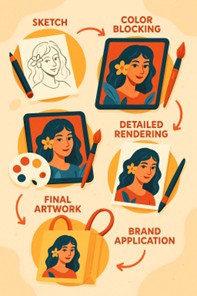
An illustrated cover isn’t just a one-off project; it’s the starting point for a much bigger strategy. A strong book cover illustration can be utilized in multiple marketing channels if used wisely.
Minimalist sketches work for sleek, modern brands. Bold, colorful novel cover designs suit playful campaigns. The chosen style should reflect the emotion you want audiences to associate with your product.
One well-crafted book cover artwork can stretch far beyond the page:
When a consistent illustrated style appears across online and offline platforms, recognition grows. Customers often identify a brand by its visual style before even reading its name. Think of how Heartstopper’s pastel illustrations became synonymous with the series.
Instead of treating it as a one-time hire, building long-term partnerships with illustrators creates a recognizable brand voice. Over time, your illustrator’s style becomes part of your DNA, an evolving book cover illustration strategy that grows with your business.
Illustrated covers aren’t just a trend; they’re reshaping how stories, products, and brands stand out in 2025. Where stock photos feel repetitive and forgettable, illustrated covers deliver originality, authenticity, and a lasting impression.
Audiences are no longer responding to recycled visuals. They want designs that feel fresh, intentional, and unique. That’s exactly where an Illustrated cover makes the difference, not only grabbing attention but building loyalty and recognition over time.
If you’re ready to stop looking like everyone else and start building a visual identity that people remember, 360 Illustrations can help.
Visit us today and see how we can illustrate covers that turn your vision into a standout design.
Looking for more information? Call us at +1 (855) 521-5040 for quick support!


Have a project in mind? Reach out to us, and we’ll help turn your ideas into stunning illustrations.
Tell us what you need, and we’ll create a custom illustration just for you. Reach out today and let's get started!
 +1 (855) 521-5040

Copyright © 2026 360 Illustration House | All rights reserved. Terms And Conditions | Privacy Policy | Refund Policy


 LIVE CHAT
 +1 (855) 521-5040